
Case Study
Mid Central DHB Acute Mental Health Unit
Performance-based fire curtain engineering for a sensitive healthcare environment - compliant, discreet, and designed around patient wellbeing.
Planning a similar project? Call 09 300
1980
today to
speak to one of our specialists.
Project Overview
The MidCentral DHB Acute Mental Health Unit was designed to provide a safe, therapeutic environment for patients while meeting the stringent life safety requirements expected within a modern healthcare facility.
As part of the project, the design team required a fire and smoke protection solution that could integrate seamlessly into the operational needs of a mental health environment. Traditional fire safety warning systems presented challenges due to concerns around noise, visual disturbance, and patient wellbeing
For Smoke Control New Zealand, the project presented an opportunity to collaborate closely with the consultant team to develop a tailored fire curtain solution that balanced compliance, functionality, and occupant comfort.
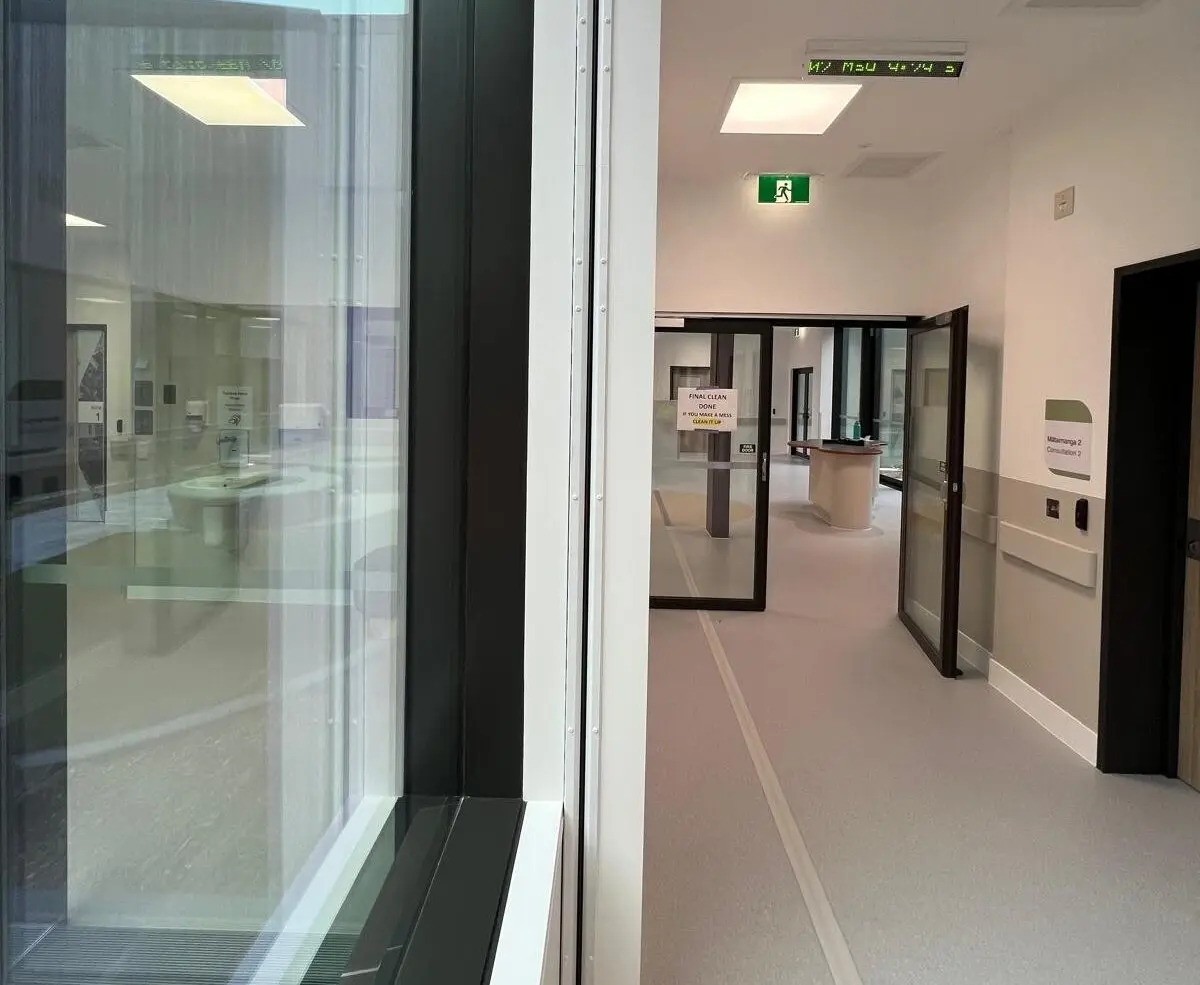
In September 2022, Smoke Control New Zealand was approached by WSP regarding the use of Fibershield® ULR Fire Curtains for the MidCentral DHB Acute Mental Health Unit.
A key project requirement was the inclusion of obstruction sensors on the fire curtains. However, due to the sensitive nature of the facility, the client specifically requested that local flashing lights and audible warning devices not be used, as these could create unnecessary disturbance for patients and staff
The project team also required greater flexibility around obstruction detection timing. Standard warning delays were considered unsuitable, as temporary obstructions beneath the fire curtains could occur during normal operations. The system needed to allow an extended delay period before triggering a fault or warning condition.
The challenge was to develop a solution that would:
- Meet fire safety and compliance requirements
- Minimise disruption within a mental health environment
- Provide remote notification of obstructions
- Allow flexible time delays to suit operational needs
- Integrate seamlessly with the building systems
Smoke Control’s Role
Our team proposed utilising the fire curtain control system's 24V output to provide remote obstruction indication directly to the building's security or monitoring systems, eliminating the need for local flashing lights or audible alarms.
We also confirmed that the obstruction sensors could be programmed through the curtain control system's PLC, allowing activation delays to be customised to suit the facility's operational requirements. This provided the flexibility to accommodate temporary obstructions without generating unnecessary alerts.
Throughout the design process, Smoke Control assisted the consultant team in coordinating system requirements, ensuring all fire curtain interfaces, power requirements, and sensor provisions were appropriately captured within the project documentation.
Our Solution
Fibershield® ULR Fire Curtain System
During the design phase, the project team initially considered fire curtain solutions that would have required higher fire ratings, larger structural bulkheads, and more complex installation requirements.
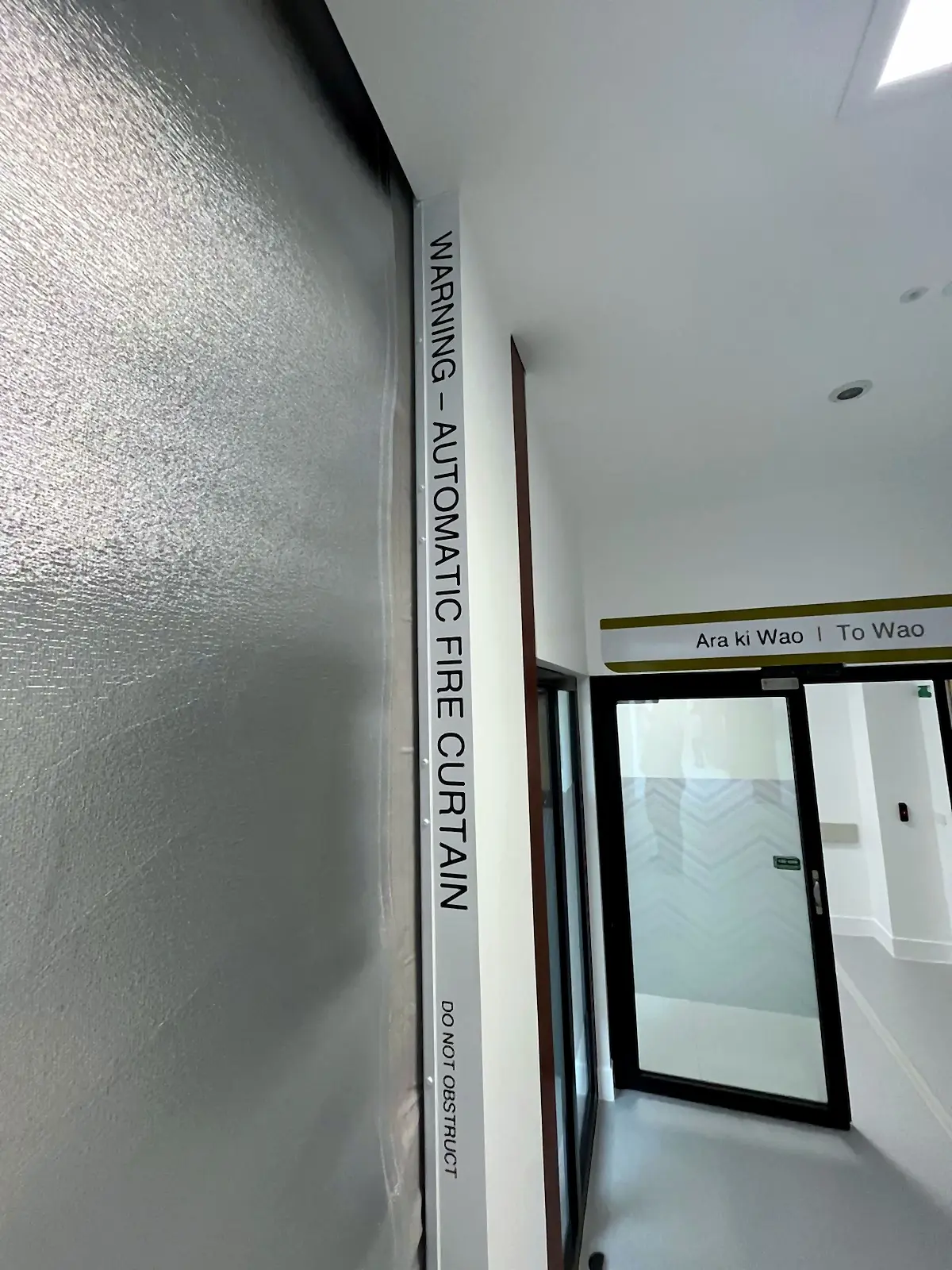
To reduce both construction complexity and project costs, Smoke Control proposed an alternative performance-based solution using Fibershield® ULR Fire Curtains.
The proposed system delivered:
- Remote obstruction monitoring via building management and security systems
- Customisable obstruction warning delays
- Reduced visual and acoustic impact on occupants
- Simplified integration into the building structure
- A cost-effective alternative to more complex fire-rated curtain systems
The recommendation was reviewed and accepted by both the architect and fire engineer, who supported the performance-based approach and its suitability for the project.
Outcomes
Following approval of the design strategy, LT McGuinness procured four Fibershield® ULR Fire Curtains from Smoke Control New Zealand for installation throughout the facility.
The solution successfully achieved:
- Compliance with project fire engineering requirements
- Reduced structural complexity
- Improved integration with building operations
- Enhanced occupant comfort within a sensitive healthcare environment
- Significant cost savings compared with alternative solutions
The Result
Safety, Openness, And Beauty — In One Building
The MidCentral DHB Acute Mental Health Unit demonstrates how fire protection systems can be adapted to meet the unique operational needs of specialised healthcare environments.
By working collaboratively with the design team and challenging conventional approaches, Smoke Control delivered a solution that maintained life safety objectives while supporting the wellbeing of building occupants.
For Smoke Control New Zealand, projects like this highlight the value of early engagement, technical expertise, and performance-based design in creating practical fire protection solutions that work for both people and buildings.
Because the best fire protection solutions don't simply achieve compliance, they support the way a building is designed to function every day.

SMOKE CONTROL NEW ZEALAND
SERVICE & MAINTENANCE ENQUIRIES
+64 9 300 1980
Mon to Fri – 8am to 5pm only
AH service available for approved customers.
Contact us for details.
SMOKE CONTROL AUSTRALIA
SMOKE CONTROL INTERNATIONAL
Smoke Control © 2022. Terms & Conditions | Privacy Policy | Disclaimer
Website by RGB Technologies