
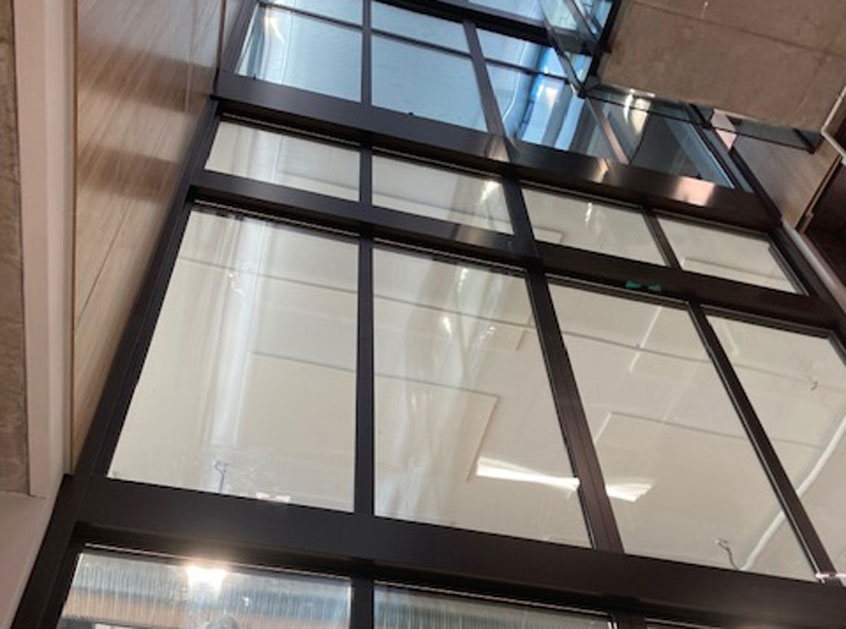
Choosing a fire-rated glazing system in New Zealand involves more than checking its fire rating.
Architects, fire engineers, builders and specifiers also need to consider the quality of the fire-rated glass, the complete tested system, manufacturing controls, installation requirements and how the glazing can be expected to perform and look over time.
This is particularly important because fire-rated glazing often forms a highly visible part of a building. It needs to contribute to fire safety while also meeting the architectural intent of the space.
So, when comparing fire-rated glass products and competing suppliers, there is an important question we urge to ask: Will this fire-rated glazing system perform as specified and continue to meet the project’s functional and architectural expectations over the long term?
Fire-rated glazing as a whole system
Fire-rated glazing should be considered as a complete system, rather than simply a piece of fire-resistant glass.
Depending on the application, a fire-rated glazing system may incorporate:
- Fire-rated glass
- Framing
- Glazing beads
- Seals and setting materials
- Fixings and anchors
- The surrounding building construction
These components need to work together as an appropriate system. For this reason, specifying fire-rated glass based solely on the glass manufacturer’s stated fire performance can overlook an important part of the picture.
The relevant question is not simply: “Has this glass been fire tested?”
It is: “What evidence supports the complete fire-rated glazing system proposed for this particular application?”
Why does fire-rated glass quality matter?
Fire-rated glass has a demanding role within a building. It provides visibility, distributes light and design openness while forming part of a fire-resistant construction. In many projects, it is an important architectural feature, so the quality of the product matters for a range of reasons.
First and foremost, a proposed fire-rated glazing system must have appropriate evidence supporting its required fire performance.
But architects and specifiers need to consider factors such as:
- Manufacturing quality and consistency
- Optical clarity
- Compatibility between system components
- Suitability for the intended environment
- Installation requirements
- Quality assurance
- Product traceability
- Warranty conditions
- Technical support throughout the project
Two systems that appear similar on a product schedule may not necessarily be equivalent in all of these respects.
Can fire-rated glass become cloudy, hazy or discoloured?
One question we are increasingly asked is whether fire-rated glass will become cloudy, hazy, bubbly or discoloured over time. The answer is, visible changes can occur, but should be investigated when they do.
Depending on the quality of the glazing and the project circumstances, changes in appearance might include:
- Cloudiness or haze
- Reduced optical clarity
- Apparent bubbles or changes within layered constructions
- Localised discolouration
- Changes around the edges of the glazing
- Other visible deterioration
Appearance alone does not identify the cause of a problem or necessarily mean fire performance has been compromised. Factors such as manufacturing, installation, materials and environmental exposure may all need to be considered.
However, appearance matters. Loss of clarity can still lead to costly rectification, making long-term product quality an important consideration when specifying fire-rated glazing.
When fire-rated glass is manufactured correctly using quality materials, cloudiness, hazing, bubbling or discolouration should not be expected as a normal part of its service life. While environmental factors may contribute to changes in appearance over extended periods, premature deterioration should not be considered normal and warrants investigation.
What can affect the long-term performance of fire-rated glazing?
There is no single explanation for every glazing issue. Fire-rated glazing products also use different technologies and constructions, so their requirements and limitations can differ.
When assessing a system, architects and specifiers should consider several factors.
- Manufacturing quality
Choose products from reputable manufacturers with strong quality control, traceability and proven consistency. - Complete tested system
Fire-rated glass must be considered as part of the complete tested system, including framing, seals, fixings and other components. - Installation quality
Correct installation is critical, with all framing, fixings, seals and clearances meeting the system requirements. - Environmental conditions
Ensure the glazing system is suitable for its intended environment, particularly when considering internal versus external applications. - System compatibility
All components must be compatible, as substituting individual products can affect the performance of the complete system.
Fire-rated glazing compliance in New Zealand
Fire-rated glazing in New Zealand needs to be considered within the requirements of the New Zealand Building Code and the supporting evidence applicable to the proposed system.
New Zealand’s current Building Product Specifications include requirements relevant to fire-resisting glazing and recognise applicable fire-resistance test methods. NZS 4232.2 also addresses performance criteria for fire-resisting glazing systems.
For architects, engineers and builders, however, compliance should be regarded as the starting point of the specification process, not necessarily the end of it.
A fire test establishes important information about a system’s performance under specified test conditions.
It does not automatically answer every question about:
- Product quality
- Manufacturing consistency
- Optical quality
- Suitability for a particular environment
- Installation capability
- Technical support
- Warranty
- Long-term appearance
These factors should form part of the wider product assessment.
Questions to ask before specifying fire-rated glass
When comparing fire-rated glazing systems and suppliers in New Zealand, these questions can help identify important differences between products.
- What test evidence supports the system?
Confirm the evidence applies to the complete proposed configuration, not just the glass.
- Who manufactures the system?
Check the provenance and quality assurance behind the glass and framing components.
- What are the system limitations?
Understand any restrictions around dimensions, framing, orientation, fixings and supporting construction.
- Is it suitable for the environment?
Confirm the system is appropriate for its intended location and conditions.
- What about long-term optical quality?
Ask about expected appearance, environmental limitations, warranties and support for visual issues.
- Who installs the system?
Ensure installers have the appropriate experience and understand the system’s specific requirements.
- What support is provided after installation?
Understand who handles technical issues, warranties and responsibility for the glass, framing and installation.
Are all fire-rated glazing systems the same?
No. Different fire-rated glazing systems can use different glass technologies, framing systems, manufacturing processes and installation methods. They may also have different tested configurations, application limitations and support arrangements.
This becomes especially important when an alternative or “equivalent” fire-rated glass product is proposed during procurement.
Smoke Control New Zealand’s approach to fire-rated glazing
At Smoke Control NZ, we believe buildings should be both safe and beautiful.
That principle shapes our approach to fire-rated glazing. We consider the complete system and how it integrates into the wider building design, providing support across design, supply, installation and ongoing service.
Working with reputable specialist suppliers, our technical team supports architects, engineers and contractors with system requirements, technical evidence and installation considerations.
Our goal is to deliver the right fire-rated glazing system for each project, backed by the right technical evidence and expertise.
Choosing fire-rated glazing for your next project
Fire-rated glazing can make an important contribution to both fire safety and architectural design. But not every fire-rated glazing system is identical, and a specification should consider more than the fire rating alone.
Before selecting a product or approving an alternative, look closely at:
- The complete system
- Supporting fire test evidence
- Manufacturing quality
- Product provenance
- Application limitations
- Installation requirements
- Expected long-term appearance
- Warrant
- Technical support
Taking the time to ask these questions early can help protect the architectural intent of the project while providing greater confidence in the system being specified.
Need help specifying fire-rated glazing in New Zealand?
If you are an architect, fire engineer, facade engineer, builder or specifier working on a project involving fire-rated glass or fire-rated glazing, speak with the Smoke Control NZ technical team early in the design process.
We can help you understand the available systems, technical requirements and specification considerations for your project.
This article provides general guidance only. Project-specific fire-rated glazing requirements should be assessed against the applicable New Zealand Building Code requirements, fire engineering design, consent documentation and supporting technical evidence.